Super Grotto Escape: How Light Maps an Underground Space
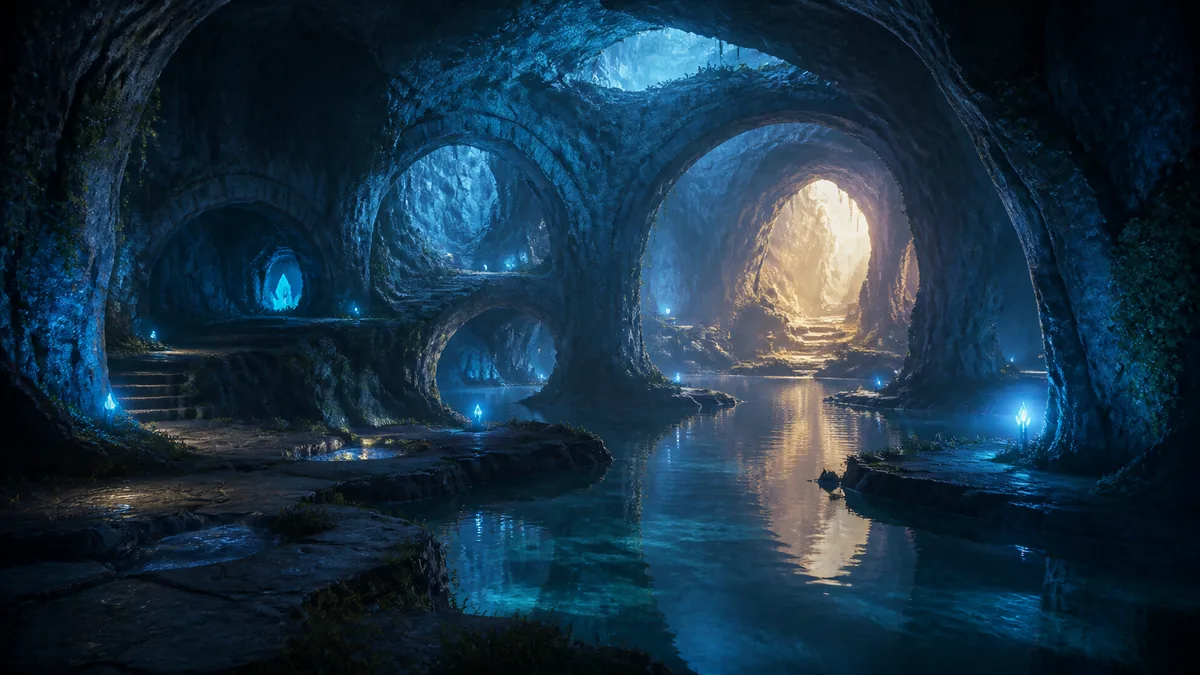
Super Grotto Escape evokes an underground environment where visibility matters as much as scale. Stone arches, still water, and a distant opening divide the cavern into readable zones. This editorial study concentrates on environmental guidance and avoids inventing objectives, opponents, or equipment.
Design Review
Cool and Warm Light Define Separate Areas
Blue accents describe the inner chambers and reveal wet rock surfaces. Warm daylight belongs only to the exit, making it the clearest landmark in the composition. The contrast communicates direction without signs or interface elements. The hero image is original editorial artwork rather than a gameplay screenshot.
Natural Openings Create a Visual Route
Each arch reveals another part of the grotto, producing a sequence from dark foreground to illuminated distance. Steps on the left provide a second directional cue, while the reflective water repeats the brightest opening and pulls attention toward it.
Details in Focus
- Arches frame successive layers of depth.
- Reflections identify open water and light sources.
- Steps distinguish accessible ground from rock walls.
- Small luminous accents preserve detail in shadow.
Closing Analysis
The cavern remains understandable because illumination is selective. Repeated arches organize depth, and the warm exit provides a destination against the cooler underground palette.
Enter the Grotto Page
Open Super Grotto Escape on GamesX, explore Shooting Games, or return to the GamesX homepage.
Extended Design Review
In Super Grotto Escape, the technical importance of Design Review lies in how it affects visual hierarchy. The detail can be evaluated at thumbnail size and again at full width, revealing whether the hierarchy remains consistent. The specific note “Arches frame successive layers of depth” supplies an article-based reference, so the discussion can develop from material already established rather than from an invented feature. That critical boundary strengthens the article by separating observable design from speculation.
The clearest critical entry into Super Grotto Escape is the relationship summarized by Cool and Warm Light Define Separate Areas. Edges, scale changes, tonal separation, and negative space determine whether that relationship remains readable. The specific note “Reflections identify open water and light sources” supplies an article-based reference, so the discussion can develop from material already established rather than from an invented feature. That critical boundary strengthens the article by separating observable design from speculation.
A design-focused review of Super Grotto Escape should test the article’s claim about Natural Openings Create a Visual Route against the whole composition. This method treats the image as a designed system rather than as evidence for mechanics that have not been documented. The specific note “Steps distinguish accessible ground from rock walls” supplies an article-based reference, so the discussion can develop from material already established rather than from an invented feature. That critical boundary strengthens the article by separating observable design from speculation.
In Super Grotto Escape, the technical importance of Details in Focus lies in how it affects visual hierarchy. The detail can be evaluated at thumbnail size and again at full width, revealing whether the hierarchy remains consistent. The specific note “Small luminous accents preserve detail in shadow” supplies an article-based reference, so the discussion can develop from material already established rather than from an invented feature. That critical boundary strengthens the article by separating observable design from speculation.
The clearest critical entry into Super Grotto Escape is the relationship summarized by Closing Analysis. Edges, scale changes, tonal separation, and negative space determine whether that relationship remains readable. The specific note “Arches frame successive layers of depth” supplies an article-based reference, so the discussion can develop from material already established rather than from an invented feature. That critical boundary strengthens the article by separating observable design from speculation.
A design-focused review of Super Grotto Escape should test the article’s claim about Enter the Grotto Page against the whole composition. This method treats the image as a designed system rather than as evidence for mechanics that have not been documented. The specific note “Reflections identify open water and light sources” supplies an article-based reference, so the discussion can develop from material already established rather than from an invented feature. That critical boundary strengthens the article by separating observable design from speculation.
In Super Grotto Escape, the technical importance of Design Review lies in how it affects visual hierarchy. The detail can be evaluated at thumbnail size and again at full width, revealing whether the hierarchy remains consistent. The specific note “Steps distinguish accessible ground from rock walls” supplies an article-based reference, so the discussion can develop from material already established rather than from an invented feature. That critical boundary strengthens the article by separating observable design from speculation.
The clearest critical entry into Super Grotto Escape is the relationship summarized by Cool and Warm Light Define Separate Areas. Edges, scale changes, tonal separation, and negative space determine whether that relationship remains readable. The specific note “Small luminous accents preserve detail in shadow” supplies an article-based reference, so the discussion can develop from material already established rather than from an invented feature. That critical boundary strengthens the article by separating observable design from speculation.
A design-focused review of Super Grotto Escape should test the article’s claim about Natural Openings Create a Visual Route against the whole composition. This method treats the image as a designed system rather than as evidence for mechanics that have not been documented. The specific note “Arches frame successive layers of depth” supplies an article-based reference, so the discussion can develop from material already established rather than from an invented feature. That critical boundary strengthens the article by separating observable design from speculation.