Watermelon Stack 3D — A Design Review of Placement
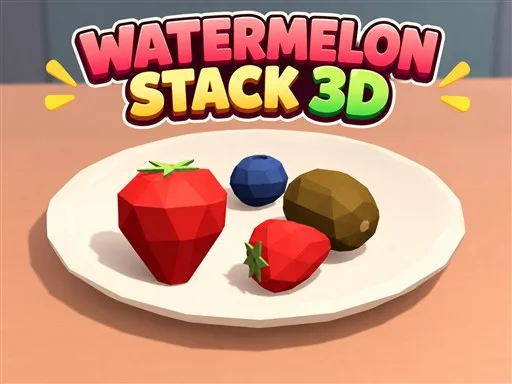
Watermelon Stack 3D gives a familiar fruit a spatial problem: arrangement in a three-dimensional stacking scene. The supplied material supports the watermelon theme, bright color, and broad idea of placement, but does not verify an exact scoring system, increasing pace, or a fixed number of stages. A useful design review therefore begins with the relationship among object shape, depth, and the space still available for another placement.
Critical takeaway first
The design question is whether a stack remains readable as it grows. A single round fruit is easy to identify; several overlapping fruit forms can become a visual mass unless edges, shadows, and depth cues keep them separate. Good spatial feedback should show the resulting arrangement clearly. The current game, not this article, must establish what counts as a valid move.
The “3D” in the title points to depth, but it does not automatically imply a rotatable camera or physics simulation. Those would require direct confirmation. What can be assessed from the theme is how fruit color and form help the viewer understand the stack as a coherent object rather than a flat pattern.
Placement has a before and after
Every stacking premise involves a comparison between a position before placement and the arrangement afterward. The available space changes, and the outline of the whole group may change with it. That simple visual sequence is more informative than calling the game “fast-paced” without evidence. It also keeps attention on the stated subject rather than imagined rewards or combos.
A clear placement scene lets the player distinguish the active fruit from fruit already settled. Contrast may come from a highlight, a shadow, or spacing; the source does not specify which. Once the object joins the stack, the image should allow a fresh reading of the available space. If the live game includes additional rules, it can explain them at that point.
Depth without unnecessary noise
Three-dimensional presentation can introduce perspective and overlap. Both add richness, but either can obscure the exact shape of a crowded stack. A recognizable watermelon surface offers a strong color anchor. Background treatment should support that anchor, leaving enough contrast for the active area to remain legible. This is a design criterion, not a claim about a specific interface panel.
The fruit theme is playful and instantly recognizable. Its pattern and shape can carry identity even when several objects touch. That repetition is useful: it links new pieces to the established arrangement while changes in position supply the variation.
Details worth inspecting
- How the active fruit is distinguished from the settled stack.
- Whether depth cues keep overlapping shapes separate.
- How much open space remains after a placement.
- Where the live game explains controls and success conditions.
- Whether effects clarify or conceal the new arrangement.
A review without invented rules
The old description used broad phrases about escalating pace and seamless interaction. Those are not reliable specifications. Nor do the title and theme prove a particular merge rule, score formula, timer, or mobile control method. The review can still be precise by asking how placement is communicated, what the fruit shape contributes to readability, and how the 3D scene manages overlap.
This restrained approach matters for a puzzle page. Readers should know the theme and the visual problem before entering, but they should not be promised systems that might not exist. Clear expectations are more useful than inflated claims of endless levels or flawless performance.
Source and navigation
Inspect Watermelon Stack 3D for the current rules and interface. The Puzzle Games category provides a wider route through spatial and logic-oriented browser titles. This particular game is best understood through the tension between a recognizable fruit form and the changing space around a stack. The live version can show whether additional mechanics deepen that idea; the verified material is already enough to make placement the central design question.